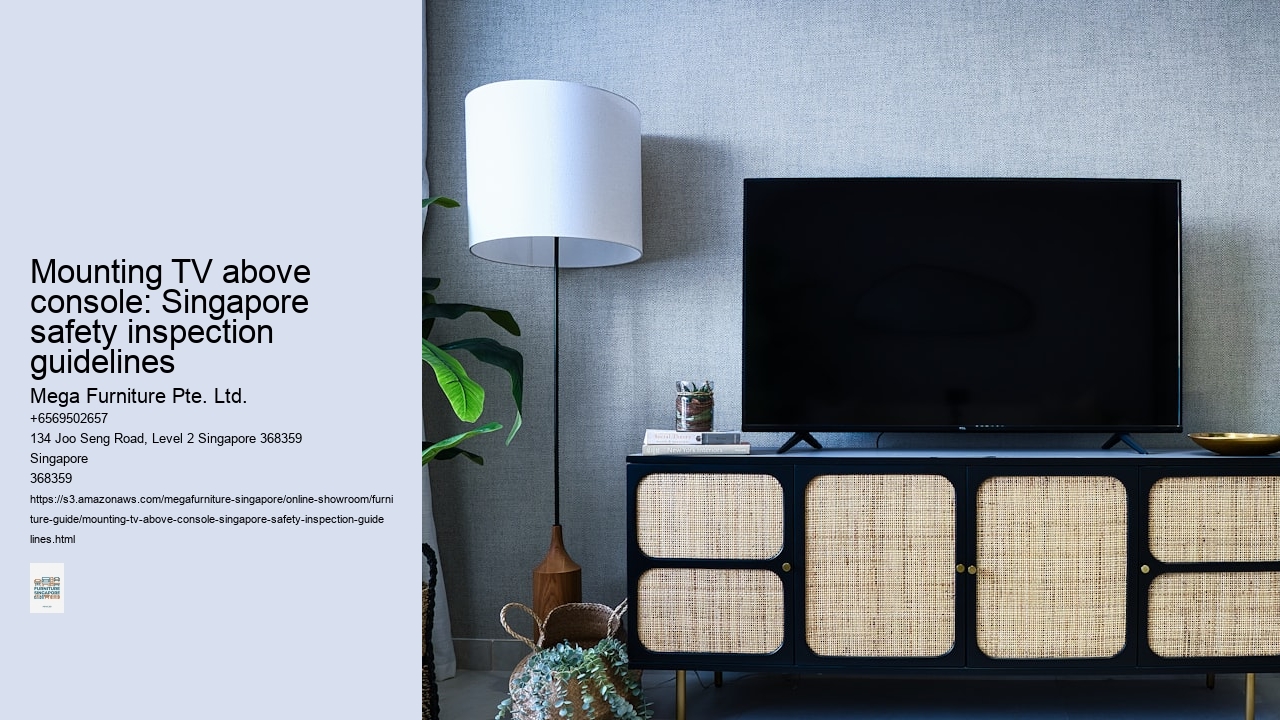
The BTO feature wall is a blessing and a curse—it gifts you a focal point, then dictates every centimetre of your layout. You’ll find your TV console’s length and placement are largely predetermined, forcing a careful match between screen size and that fixed wall segment. In many new flats, that means a 55-inch TV on a 180cm console fits neatly, but a 65-inch screen might overwhelm the allocated space, leaving no room for speakers or display shelves.
Viewing distance remains the critical, often ignored, metric. A 55-inch screen suits a room depth of around 2.5 metres, while a 65-inch model needs closer to 3 metres for comfortable viewing. In a typical 4-room BTO living room, that extra half-metre of depth is frequently eaten up by the dining area; buyers then wrestle with choosing a screen that’s either too large for the space or too small for the wall.
Resale flats introduce their own quirks, like uneven floors that can make a long, low console wobble precariously. It’s a common headache in older HDB blocks, where a spirit level reveals slopes that demand adjustable feet or shims—something to check before you commit to a 220cm solid wood unit. Condo bay windows, meanwhile, disrupt clean console placement entirely, often pushing your entire media setup off-centre or forcing a custom, shorter solution.
The console itself needs to anchor the setup physically and visually. A 65-inch TV requires a console at least 180cm long for visual balance, but in a narrow living room, that can leave barely any walkway. It’s a trade-off: the immersive experience of a larger screen versus the practical reality of your room’s proportions. For those navigating these spatial puzzles, browsing the options for appropriately scaled consoles is a logical next step.
That solid teak console you admired in a showroom's climate-controlled air might warp within a year in a ground-floor Tampines flat. Singapore's persistent humidity is brutal on solid timber, causing expansion, contraction, and irreversible cupping across long spans. Engineered cores like plywood or MDF are far more stable; their cross-grained or compressed fibre construction resists moisture absorption that leads to swelling. For a 180cm console holding a 65-inch TV, this dimensional stability is non-negotiable. You're investing in a piece that needs to stay perfectly level for your screen, not become a conversation piece about the weather.
Scratches from a robot vacuum or a child's toy car are inevitable in a busy family living room. High-pressure laminate tops, especially in matte or textured finishes, offer remarkable scratch and stain resistance compared to lacquered wood or veneers. These surfaces wipe clean with a damp cloth, handling spills from afternoon tea or sticky fingerprints without a fuss. For households with pets, where claws might graze the console during play, a robust laminate is a practical shield. It’s the workhorse finish that lets the design breathe without you worrying about every little mark.
If you want the warmth of wood grain without the fragility of natural veneer, non-woven veneer is a clever solution. It’s made by reconstructing wood fibres into a consistent sheet, which is then dyed and finished, resulting in exceptional uniformity and colour control. This process eliminates the knots and soft spots found in natural wood, giving you a flawless appearance across a two-metre run. It’s also less prone to cracking or peeling in our humid climate, a common failure point for traditional veneers glued over MDF. You get the aesthetic payoff with significantly more resilience.
While the cabinet body battles humidity, the supports face a different enemy: daily abrasion. Powder-coated steel or aluminium legs resist scuffing from foot traffic and vacuum cleaners far better than stained timber feet. In a compact 4-room BTO layout where furniture is skirted constantly, this durability matters. A good powder coat also prevents rust in coastal neighbourhoods like Marine Parade or East Coast, where salt air is a silent contributor. They lift the console visually, creating a floating effect that makes a narrow room feel less crowded.
The weakest point on any panel isn’t its face, but its exposed edges where moisture can seep into the core. Properly sealed and banded edges on doors, drawers, and shelves are a critical detail many buyers overlook. This isn’t just about aesthetics; it’s a functional barrier. Look for consoles with thick, well-adhered edge banding, preferably with a rounded profile that’s less likely to chip. In a humid environment, an unsealed MDF edge acts like a sponge, swelling and ruining the clean lines of your media wall. That attention to detail separates a lasting piece from a disposable one.
A 240cm solid wood console might look stately in a showroom, but it’ll swallow a 12 sqm living room whole. That’s the proportion trap in a nutshell — buyers prioritise TV size but forget the footprint of the furniture beneath it, ending up with a media wall that feels more like a blockade. The resulting space is cramped for movement and throws off the room’s entire balance; a 180cm unit often provides better storage without the visual weight.
Function falters just as easily with technical oversights. Running standard, underpowered HDMI cables through a wall conduit is a classic regret. When you upgrade to a 4K or 8K TV a year later, those cables can’t handle the bandwidth, forcing a costly and frustrating re-run. The proper fix is to install certified ultra-high-speed cables from the start, even if your current setup doesn’t require them — it’s a one-time job that future-proofs the entire installation.
Then there’s the floating console on a hollow HDB partition wall. It’s a sleek look that turns disastrous when not anchored into proper studs. That sleek, handle-less design you loved at Megafurniture’s Tampines showroom can’t just hang on plasterboard; the weight of a 65-inch TV and AV equipment will eventually stress the fixings, leading to a dangerous pull-out. A proper installation requires a stud finder and often additional timber battens, which means planning before you buy.
Material choice here is as much about engineering as aesthetics. A floating console in solid timber or heavy sintered stone demands a wall that can carry it, while a laminated particleboard option might be lighter but less durable for daily use. The smart move is to measure your wall type and intended load before even browsing the options, letting those constraints guide your selection rather than fighting them after delivery.
It’s a lesson in measured decisions: the right console isn’t the largest or the most minimalist, but the one that fits both your room’s dimensions and your home’s actual construction.
The living room’s most scrutinised piece of furniture isn’t the sofa — it’s the TV console, which must quietly endure daily jabs from vacuum cleaners, hold a shifting pile of game controllers, and somehow hide a bird’s nest of cables. For a true sense of how a console will perform in a local flat, you’ve got to see it in person. That means a visit to a showroom, like the ones in Joo Seng or Tampines, to test the fundamentals buyer reviews often miss. Start with simple sturdiness. A gentle shake of the unit, especially the open shelves or cantilevered ends common in floating designs, reveals a lot. In many 4-room BTO living rooms, this console will sit directly opposite a sofa; any wobble or vibration from a subwoofer becomes immediately apparent. Check the back panel, too — is it a flimsy cardboard sheet or a proper plywood board that can handle the repeated plugging and unplugging of HDMI cables? Drawer glide smoothness is another non-negotiable. You’ll be accessing these drawers daily for router resets, spare batteries, or that one specific remote. Test every drawer, applying a bit of side pressure to see if they bind. Cheap runners feel gritty and tend to fail after a year of humid exposure, while full-extension soft-close mechanisms, though pricier, operate with a satisfying, silent push that’s worth the extra cost for a long-term piece. The real test for Singaporean utility, however, is cable management. Look for consoles with multiple, large grommet holes — at least 80mm in diameter — positioned logically near where your StarHub or Singtel media box will sit. Some models offer a vertical cable chase at the rear, which is ideal for running a power strip up from a floor socket. Without these specifics, you’re left with a tangled mess visible from your dining area in an open-concept layout. Finally, consider the console’s proportions against your actual wall. A 240cm media console might look grand in a Tampines showroom, but it can overwhelm a narrower HDB living room wall, leaving no space for a plant or floor lamp. Bring your room’s measurements and visualise the fit; it’s the only way to ensure the piece centres your space, rather than cramming it. For a detailed look at options that address these local concerns, you can browse the
TV console collection.
The delivery truck can’t park at your void deck—that’s the easy part. The real logistics begin at the lift lobby, where a 240cm console box often wedges diagonally across the doors, and some older HDB blocks have landings barely 150cm wide. You’ll want to confirm those dimensions before the crew arrives, because stairwell carries typically incur a surcharge of $80 to $150 per level, a nasty surprise when you’re already managing a $2,000 media setup. Assembly in a 4-room BTO living room isn’t just about following the manual. Verify that the quoted service includes cable concealment and basic levelling for HDB brick walls, which are rarely perfectly flat. A proper crew will bring a laser level and pack-out anchors, not just assume a few plastic plugs will hold a wall-mounted unit loaded with a soundbar and gaming consoles. That’s the difference between a console that looks integrated and one that visibly sags after six months. For floor-standing consoles, the challenge shifts to placement over existing flooring. A heavy solid wood or sintered stone piece dragged across your vinyl or engineered timber can leave permanent scratches; a reputable delivery will use furniture sliders or a protective blanket as standard. It’s a small detail that speaks to their experience in Singapore’s typical flats, where the living room often doubles as a thoroughfare. Budget for this, and be specific. A basic unpack-and-build quote might not cover removing packaging waste from your HDB corridor or the meticulous final wipe-down—tasks that become essential in our humid climate, where cardboard debris attracts pests. The smoother this final phase, the sooner you can actually use that
new TV consolefor its intended purpose: storing the clutter so your living room looks like the showroom image that sold you on it in the first place.
The most common question isn't about the TV itself, but the cabinet beneath it — and the specific constraints of a Singapore flat. Here are the practical answers that keep your setup secure and your living room looking organised.
Can I mount my TV above the air-con unit? It’s not recommended. The heat and moisture from the condenser’s exhaust can damage electronics over time, and the constant temperature fluctuations may warp the TV console’s materials. You’ll also fight a losing battle with dust accumulation. Most installers will advise a minimum 30cm clearance to the side of the unit for safety and maintenance access.
For a soundbar, ensure your console has a minimum depth of 30cm. This allows the bar to sit forward enough for clear audio projection, without overhanging precariously. A 75-inch TV can sit safely on a console, provided the console’s length exceeds 180cm — this gives a stable visual base and prevents that top-heavy look. In a typical 4-room BTO living room, that length often dictates the entire wall’s furniture arrangement.
Floating a console on a feature wall is a popular choice for a clean, minimalist aesthetic. But you must verify the wall material first. HDB feature walls are often just plasterboard or lightweight partitions; they won’t hold the weight of a solid wood console and a 55-inch TV without proper reinforcement. A contractor can confirm if you need to anchor into the structural wall behind.
Beyond size, the right console manages the inevitable cable chaos from set-top boxes, gaming consoles, and routers. Look for designs with integrated cable management ports at the back, which are far more effective than the basic grommet holes found on cheaper imports. For a curated selection that considers these local spatial quirks, you can browse the options at Megafurniture’s collection. The best media wall isn't just a display — it's a fully engineered solution for how we actually live.
That last-minute realisation in the showroom — the console you loved online is a different colour under fluorescent lights — is a common, avoidable headache. Finalising your media wall requires treating the showroom like a lab, not just a gallery. Bring your room’s floor plan with dimensions marked in centimetres, the exact model specs for your 65-inch TV, and a list of every component you need to stash: AVR, game consoles, that oversized Wi-Fi router. This isn’t overkill; it’s how you avoid buying a 180cm console that leaves your soundbar hanging off the edge in a 4-room BTO living room.
Test everything. Open every drawer and door with your actual equipment list in mind. Will that sleek, shallow drawer actually fit the PlayStation 5, or will the door catch on its cables? Operate the mechanisms several times — a smooth glide in the showroom should feel just as solid after six months of daily use in your home. Pay attention to the sound; a satisfying, quiet close is a sign of good hardware, while a hollow thud often isn’t.
Lighting is the great deceiver. That warm oak finish you adored under the showroom’s 4000K spotlights can look jarringly yellow or flatly brown under your own living room’s warm-white LEDs. If possible, ask to see the unit in a different part of the showroom, or even near a window, to approximate the natural and artificial light mix you get in your flat. It’s the difference between a piece that coordinates and one that clashes.
This final checklist transforms a speculative purchase into a confirmed fit. You’re not just buying a storage unit; you’re engineering the centrepiece of your living area. Once you’ve verified the proportions and finish, you can confidently browse the options for a console that will actually work, not just look good in isolation.
Walk into any HDB living room after 8pm and you'll find the same scene: family members craning their necks up or slouching down, trying to find a comfortable viewing angle. That's usually because the TV centre is mounted at the wrong height, often dictated by a pre-existing bracket or a misguided attempt to clear a toddler's reach. The correct ergonomic position, for seated viewing on a typical sofa, places the centre of the screen between 110cm and 115cm from the floor. A TV console anchors the wall opposite the sofa in the same way a tall bookshelf anchors a corner — long horizontal piece, mix of open and closed storage, defines the visual weight of one whole side of the room. Megafurniture's TV Console range covers floating wall-mounted designs, low-profile freestanding consoles, and modular feature-wall configurations. Most pieces sit at 40-50cm height, sized for screens up to 75 inches.. This range aligns your gaze naturally with the middle third of the screen, preventing the neck strain that's common in setups where the TV towers above a fireplace or is crammed onto a shelf that's too high.
Getting the height right is only half the equation; console length provides the visual and physical foundation. A console should extend 15cm to 20cm beyond the width of the TV on each side. This proportion isn't just about aesthetics-it creates a stable base that grounds the entire media wall, preventing the television from looking like it's teetering on a narrow ledge. For a common 65-inch TV (roughly 145cm wide), you're looking for a console around 175cm to 185cm long. This overhang also gives you practical space for speakers, decorative objects, or that inevitable pile of remotes.
In a standard 4-room BTO living room, with a depth of around 4 metres, this 110-115cm height and extended console formula works perfectly. You have the distance to accommodate a longer media unit and the wall space to let it breathe. The challenge shifts in many compact condos or older three-room flats, where living areas might be closer to 3 metres deep. A Bookshelf earns its place in Singapore homes through dual function — book and decor storage in the open shelves, soft visual division when placed mid-room in open-plan condominium layouts. Megafurniture's combined display unit and bookshelf hub covers tall book racks, cubby-hole designs, ladder shelves, modular cube systems, and glass-door pieces in oak, walnut, and MDF veneer finishes. Solid-wood pieces typically start around $425, with most heights spanning 120cm to 220cm to fit standard 2.6m HDB ceilings.. Here, a buyer might be tempted to push the TV higher to fit a taller storage unit underneath, but that's a compromise that sacrifices daily comfort for seasonal storage. It's often better to opt for a shallower, floating console that maintains the critical eye level, even if it means forgoing some cabinet depth.
Ultimately, these two measurements-vertical eye level and horizontal console length-are the non-negotiable coordinates for any successful setup. They work in tandem; a perfectly centred TV on a skimpy console looks precarious, while a generously proportioned unit is wasted if the screen is mounted too high. Getting both right turns a collection of electronics and furniture into a cohesive, comfortable media centre that actually gets used.
Walk into any HDB living room after 8pm and you'll find the same scene: family members craning their necks up or slouching down, trying to find a comfortable viewing angle. That's usually because the TV centre is mounted at the wrong height, often dictated by a pre-existing bracket or a misguided attempt to clear a toddler's reach. The correct ergonomic position, for seated viewing on a typical sofa, places the centre of the screen between 110cm and 115cm from the floor. This range aligns your gaze naturally with the middle third of the screen, preventing the neck strain that’s common in setups where the TV towers above a fireplace or is crammed onto a shelf that's too high.
Getting the height right is only half the equation; console length provides the visual and physical foundation. A console should extend 15cm to 20cm beyond the width of the TV on each side. This proportion isn't just about aesthetics—it creates a stable base that grounds the entire media wall, preventing the television from looking like it's teetering on a narrow ledge. For a common 65-inch TV (roughly 145cm wide), you're looking for a console around 175cm to 185cm long. This overhang also gives you practical space for speakers, decorative objects, or that inevitable pile of remotes.
In a standard 4-room BTO living room, with a depth of around 4 metres, this 110-115cm height and extended console formula works perfectly. You have the distance to accommodate a longer media unit and the wall space to let it breathe. The challenge shifts in many compact condos or older three-room flats, where living areas might be closer to 3 metres deep. Here, a buyer might be tempted to push the TV higher to fit a taller storage unit underneath, but that’s a compromise that sacrifices daily comfort for seasonal storage. It's often better to opt for a shallower, floating console that maintains the critical eye level, even if it means forgoing some cabinet depth.
Ultimately, these two measurements—vertical eye level and horizontal console length—are the non-negotiable coordinates for any successful setup. They work in tandem; a perfectly centred TV on a skimpy console looks precarious, while a generously proportioned unit is wasted if the screen is mounted too high. Getting both right turns a collection of electronics and furniture into a cohesive, comfortable media centre that actually gets used.